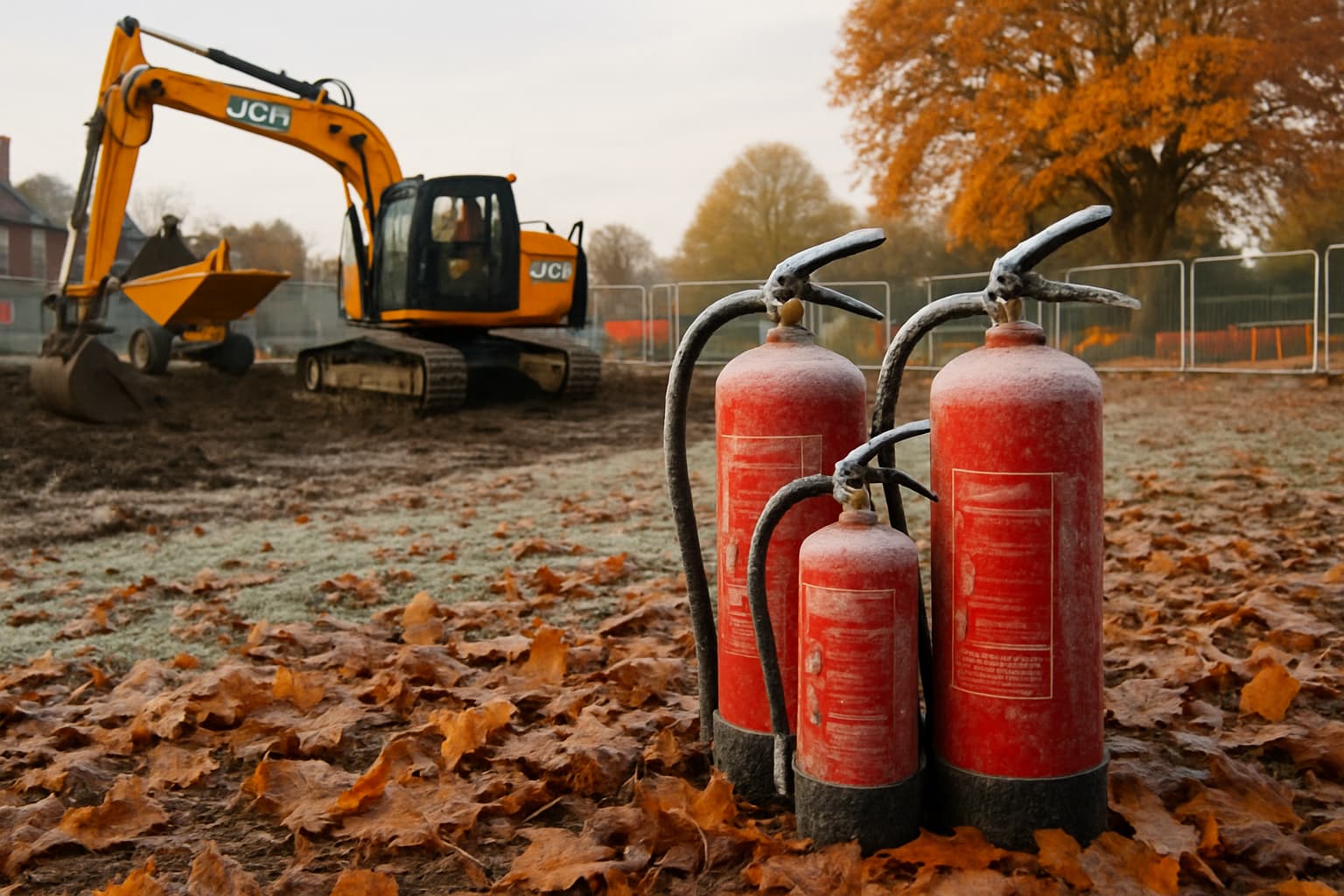


Construction sites are constantly changing. Temporary site accommodation may be relocated, access routes can change, scaffolding is altered, materials are moved around the site, and different contractors arrive as the project progresses.
These changes make fire safety more challenging, as an escape route that was suitable at the beginning of a project may no longer be effective as the project progresses.
A well-planned fire escape route is not just about having an exit door and a sign on the wall. It is about ensuring everyone on site can quickly understand where to go, how to get there safely and what to do during an emergency.
For site managers, principal contractors and health and safety professionals, maintaining effective escape routes is a key part of managing construction site fire safety.
Construction sites are different in nature from offices and warehouses as well as finished buildings; they are temporary.
The site layout can change due to a range of factors, including:
Such changes can make escape routes appear less evident. It is a common practice to think that after developing a fire evacuation route, it will be good throughout the entire project.
A useful question for site teams is:
“If someone unfamiliar with this site discovered a fire right now, would they immediately know where to go?”
If the answer is uncertain, the escape arrangements may need reviewing.
There is no single piece of legislation that covers every aspect of construction site fire safety. Instead, requirements come from several regulations and guidance documents.
The aim of UK fire safety law is not to provide a fixed checklist for every site. Instead, it requires employers and duty holders to identify risks and put suitable controls in place.
Under Regulation 31 of the Construction (Design and Management) Regulations 2015, a sufficient number of suitable emergency routes and exits must be provided to enable any person on a construction site to reach a place of safety quickly in the event of danger.
Emergency routes must lead as directly as possible to an identified safe area, be kept clear and free from obstruction (with emergency lighting where necessary), and be clearly indicated by suitable signs. In determining the number and suitability of emergency routes and exits, account must be taken of the matters listed in Regulation 30(2), including the type of work, the characteristics and size of the site, the work equipment being used, the number of persons likely to be present, and the properties of any hazardous substances or materials on site.
The Regulatory Reform (Fire Safety) Order 2005 imposes duties upon the responsible person, which includes the employer or the person who is in control of the premises to the degree that he is in control, to make sure that emergency routes and exits are appropriate and readily accessible for use.
On construction sites, the responsible person is not always the principal contractor. Responsibility depends on who has control of the premises and the fire safety measures in place, and it may change as control of the site changes. Article 14 requires that the emergency routes and exits should always remain clear, lead as directly as possible to a place of safety, have adequate signage (emergency lighting where needed), permit emergency doors to be readily openable by anyone requiring them in an emergency, and be adequate in terms of numbers and size of exits for the premises and its use and maximum occupants.
For a deeper explanation of how these duties work, see our guide to UK fire safety regulations.
The Health and Safety at Work etc. Act 1974 places a duty on all employers to ensure, as far as is reasonably practicable, the health, safety, and welfare of their employees and other people affected by their activities. However, the Health and Safety at Work etc. Act 1974 does not specify any detailed legal requirements concerning the provision of emergency escape routes.
These general duties require employers to provide and maintain a safe workplace, including safe access to and from the site, as well as safe means of escape in the event of an emergency.
An effective evacuation route begins with recognising the dangers inherent in your own project. Not all layouts will suit all construction sites; it all depends on certain things like:
Your fire risk assessment should identify potential hazards and determine suitable control measures.
For further guidance on managing fire risks throughout a project, see our ultimate guide to fire safety on construction sites.
A blocked escape route is one of the simplest fire safety issues to prevent, yet it remains one of the most common problems on active sites.
Materials, tools, waste, and equipment can gradually encroach on walkways until an emergency route becomes restricted.
Good practice includes:
Escape routes should be checked regularly as part of normal site inspections.
A route that is clear during the morning site walk may become blocked after deliveries or during busy periods, so good housekeeping needs ongoing attention.
Fire exit signage plays a vital role in helping people evacuate a building quickly and safely, especially workers, visitors, or contractors who may be unfamiliar with the premises.
However, this is only effective when the signage accurately reflects the current building layout.
On many sites, the layout changes over time while the fire exit signage remains unchanged, creating confusion and potentially delaying a safe evacuation during an emergency.
For example:
The escape route may still exist, but the original sign may now direct people incorrectly.
Good practice is to review fire exit signs whenever there is a significant change to the site layout.
Signs should be:
For advice on choosing suitable products, see our guide to fire safety signage.
Fire marshals (sometimes called fire wardens) play an important role in supporting fire safety arrangements on construction sites.
Their role is not to replace the legal responsibilities of the employer, principal contractor, or responsible person. Instead, they help make sure emergency procedures are understood and followed.
A trained fire marshal may assist by:
Construction sites often have a high turnover of contractors and visitors, making it vital to have people who know all about the evacuation procedures in case of emergencies.
Fire marshals should never put themselves at risk. Their main aim should be to assist in evacuation and not in fighting fires or delaying exit from the building or construction site.
For more information, read our guide on the role of a fire marshal and how fire wardens support workplace safety.
A safe escape route must take into account all the people who will have to evacuate.
Some workers or visitors may need more assistance because of difficulties related to their mobility, injuries, illnesses or other reasons which might hinder them from evacuating.
A Personal Emergency Evacuation Plan (PEEP) will point out what special measures should be taken in order to make the person evacuate safely.
Depending on the circumstances, this may include
Construction sites are complicated, as escape routes consist of uneven surfaces, temporary paths, different heights and limited access.
This will guarantee that all necessary preparations will serve everybody well.
Learn more about creating effective Personal Emergency Evacuation Plans (PEEPs) for workplaces.
A good fire escape route is only effective when supported by a clear emergency response procedure.
Workers should understand:
Fire action notices should be displayed in appropriate locations such as site offices, welfare facilities and other occupied temporary buildings.
Everyone joining the project should receive fire safety information during their site induction, including any changes to evacuation arrangements.
For a practical guide, see our emergency response checklist to help ensure your site procedures are ready before an incident occurs.
Many fire safety failures are not caused by a lack of equipment. They often happen because arrangements are not reviewed as the site develops.
Common issues include:
A site layout changes, but signs remain pointing towards old routes.
Solution: Inspect all signage when new pathways or cabins appear.
Materials, waste, or equipment gradually reduce available escape space.
Solution: Inspect escape routes in day-to-day inspections and encourage all site personnel to notify any obstruction in such routes.
New workers might lack knowledge regarding the site layout and emergency plan.
Solution: It is essential to make sure that each contractor gets a proper site induction.
Fire extinguishers or fire points may be moved during construction and not returned.
Solution: Clearly identify equipment locations and include them in routine site checks.
Construction projects evolve quickly, but fire safety documentation can sometimes fall behind.
Solution: Review your fire risk assessment whenever significant changes occur.
Regular checks help identify problems before they become dangerous.
Use this checklist during site inspections:
☐ Are all escape routes clear?
☐ Can workers reach exits without obstruction?
☐ Are temporary routes suitable and safe?
☐ Have recent site changes affected evacuation?
☐ Are fire exit signs visible?
☐ Do directional signs point towards the correct route?
☐ Have damaged or missing signs been replaced?
☐ Are fire extinguishers accessible?
☐ Are fire points clearly identified?
☐ Has equipment been inspected and maintained?
☐ Do workers know where the assembly point is?
☐ Have new contractors received a fire safety briefing?
☐ Are fire marshals aware of their responsibilities?
☐ Have evacuation arrangements been reviewed?
A professional fire equipment management service can also help organisations maintain inspection schedules, servicing requirements and compliance records for fire safety equipment.

UK legislation does not prescribe a specific number of daily or weekly checks for every construction site.
What is essential here is that escape routes should be maintained through suitable management arrangements and reviewed whenever circumstances change.
In practice, many construction companies include fire safety checks within:
Effective fire safety is not achieved by installing a few signs and placing extinguishers around a site.
There must be effective management of these systems. The safest construction sites will have the following features:
Fire safety must be thought of at all stages of a project, right from planning to completion. By inspecting escape routes on a regular basis and making sure that the workers know what to do in case of emergencies, construction firms can create safer workplaces.
Fire safety signs should be provided where necessary to identify emergency escape routes and where people need assistance to find a safe exit. Clear fire exit signage is an important part of the overall fire safety arrangements on construction sites.
Employers, contractors, and duty holders all have responsibilities for managing risks. Under CDM 2015, the principal contractor has important duties for planning, managing and monitoring health and safety during construction.
Emergency exits must allow people to escape quickly and easily during an emergency. They should not be secured in a way that prevents immediate escape.
The provision of fire extinguishers should be based on the risks identified in the fire risk assessment. Construction sites commonly require suitable fire-fighting equipment, particularly where there are increased risks such as hot works or combustible materials. Discover Defender’s specialist Hot Works trolley.
Emergency lighting is required when people would not be able to evacuate safely if normal lighting failed. The need depends on the specific conditions and risks of the site.
Managing fire escape routes is a continuous process. As construction sites change, fire safety arrangements must change with them.
Clear signage, accessible fire equipment, regular inspections and effective training all contribute to safer evacuation procedures.
If you need reliable fire safety products for your construction project, we supply a wide range of fire exit signs, fire action notices, fire point signs, photoluminescent signage, fire extinguishers and essential fire safety equipment.
Whether you are managing a small refurbishment project or a large construction site, our team can help you choose the right products to support a safer and more compliant workplace.
Contact us today for expert advice on fire safety signage and equipment for your construction site.