
While autumn does not create new fire risks, it does have an impact on the existing dangers at a construction site based on the weather and the conditions on job sites. The short days also call for more temporary lighting on sites, and cold weather can mean that heaters must be used at amenities and on temporary sites.
At the same time, construction sites can have changing quantities of combustible materials, waste and packaging as different stages of the project progress. HSE suggests that fire safety measures must be changed according to the changing conditions at the site and fire assessments reviewed as the conditions change.
Consequently, the beginning of the autumn season is a good time to analyse the fire safety measures at your site and ensure that they meet the current situation at the site.
A seasonal fire safety check can be a simple but worthwhile exercise. Walk around the site and look for areas where a fire could start or spread. Check that workers have a clear way to raise the alarm and can escape safely if a fire occurs.
Make sure combustible materials and waste are stored and managed correctly, potential sources of ignition are controlled, and fire-fighting equipment is easy to find and access. Check that escape routes are clear and that workers know how to raise the alarm and where to go in an emergency.
HSE guidance recommends identifying sources of ignition and combustible materials when assessing fire risks and making sure suitable arrangements are in place for raising the alarm and providing safe means of escape.
When the temperature drops, portable heaters are brought in to warm up site cabins and workspaces. But these heaters are one of the biggest fire risks on site, especially if they’re old, damaged, or placed too close to flammable materials.
Only use heaters that are safety certified and fitted with automatic shut-off features. Make sure they’re inspected regularly and always placed at a safe distance from combustible items. Never leave them running unattended, and educate your team on proper usage during toolbox talks. If you wouldn’t trust it in your home, don’t use it on site.
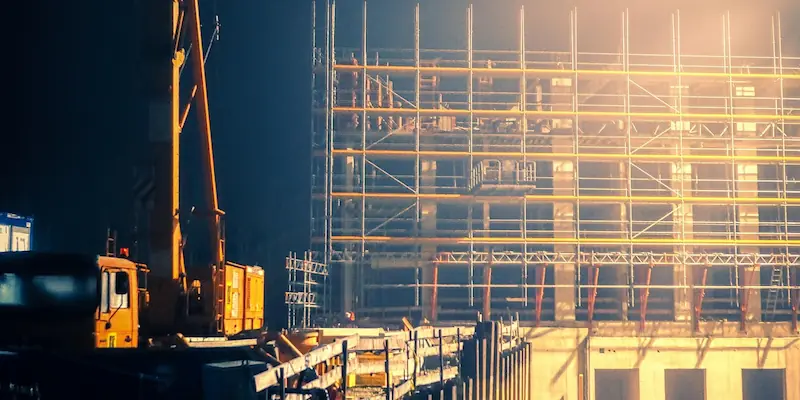
With autumn comes darker mornings and earlier sunsets; construction sites rely heavily on temporary lighting and heaters during the autumn months. But overloaded circuits, makeshift wiring, and poor-quality extension leads are a recipe for disaster.
Bring in a qualified electrician to handle all temporary electrical installations. Use only weather-resistant equipment and make sure everything is clearly labelled. Avoid daisy-chaining extension leads and inspect systems regularly for signs of wear, overheating, or damage.
Hot works such as welding, cutting, and grinding happen every day on-site. But cold conditions often lead to complacency, as workers may want to quickly finish the job if they are feeling cold. Combine that with a build-up of dry debris or flammable vapours, in poor lighting, and the risk of fire shoots up fast.
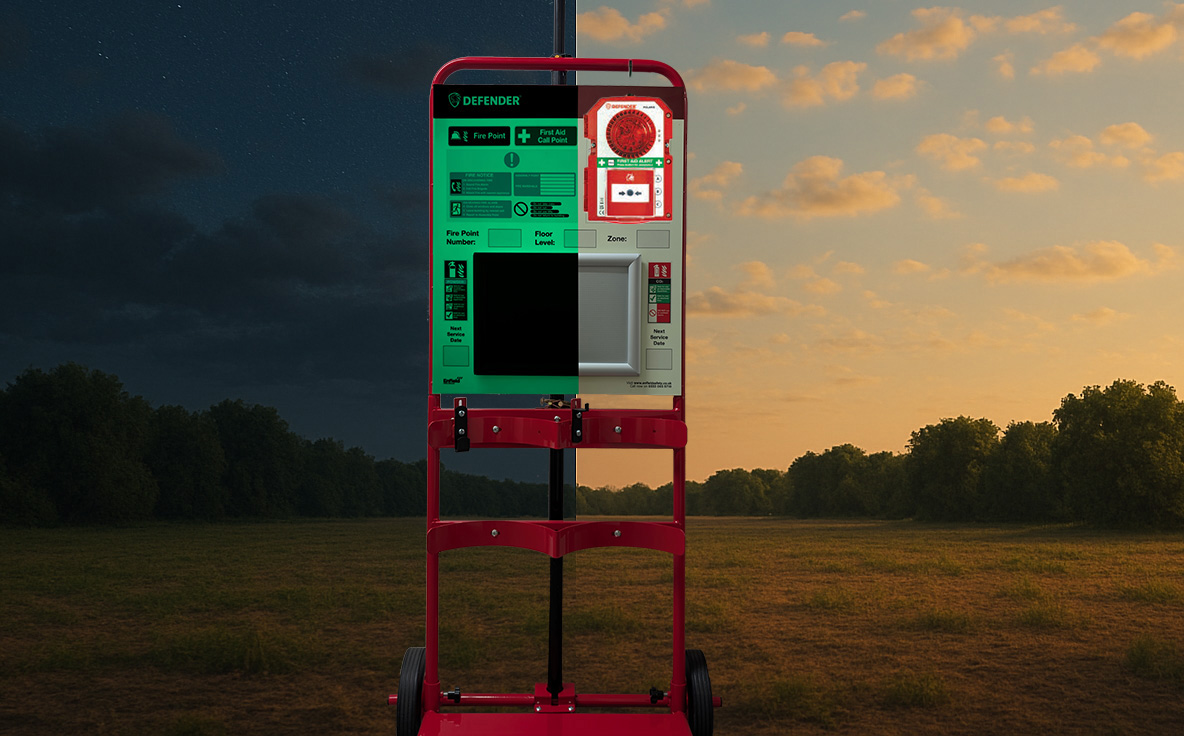
Implement a strict hot work permit system and stick to it. Before any work starts, clear the area of flammable materials and assign a dedicated fire watch. Once hot works are complete, the area should continue to be monitored for signs of fire in line with your site’s hot work procedure and risk assessment. Fire extinguisher trolleys and safety stations should always be nearby, and workers must be trained to use them.
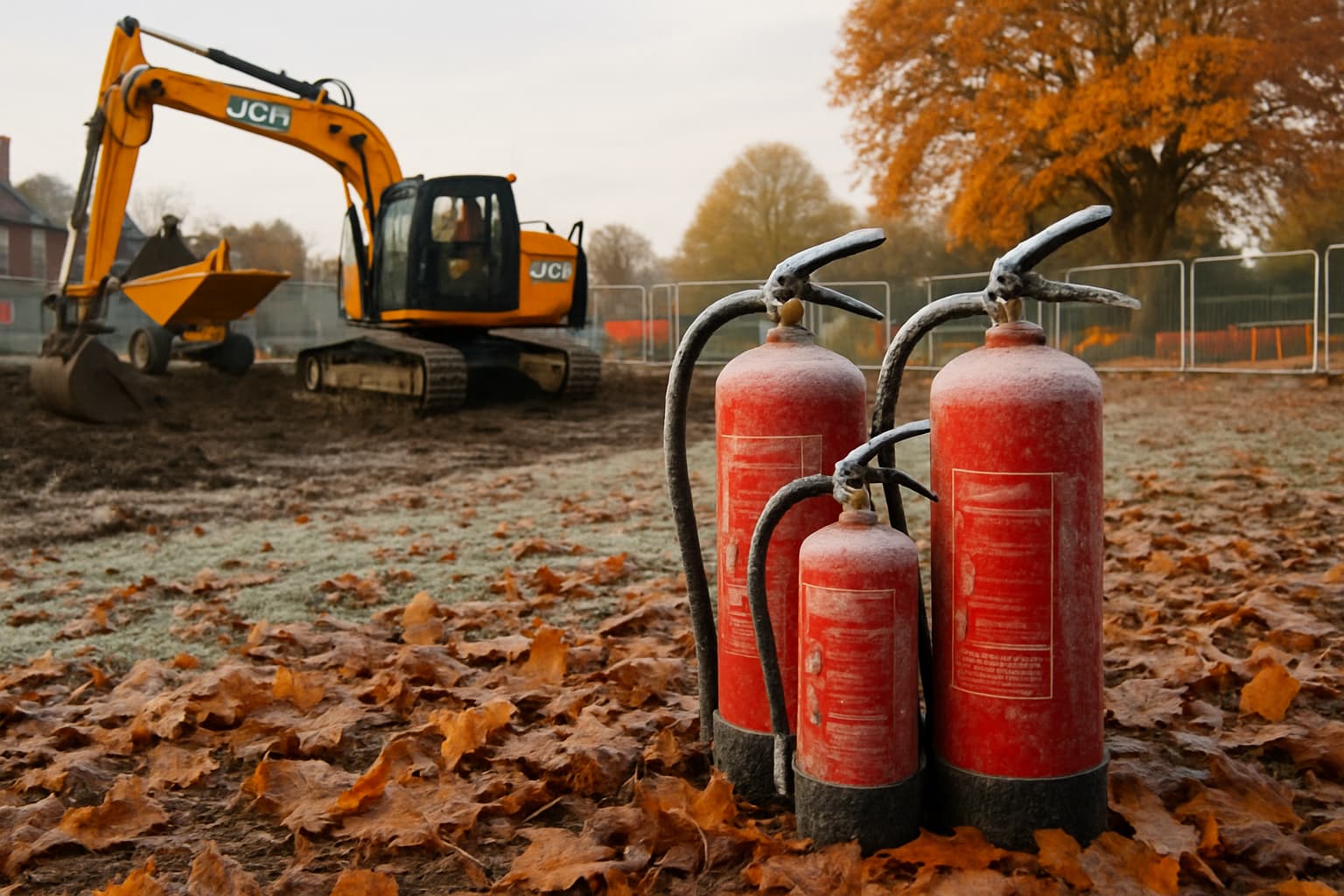
When fire extinguishers are blocked, empty, or expired, they’re no help at all. As autumn kicks in and site layouts change, fire safety equipment is often moved or forgotten altogether. That’s a major risk if something goes wrong.
Make fire extinguisher checks part of your monthly inspection. Check expiry dates, ensure proper signage is visible, and keep all equipment accessible at all times. Run regular fire drills and make sure every team member knows exactly where to find the nearest extinguisher and how to use it. Learn more about Defenders’ fire equipment maintenance service.
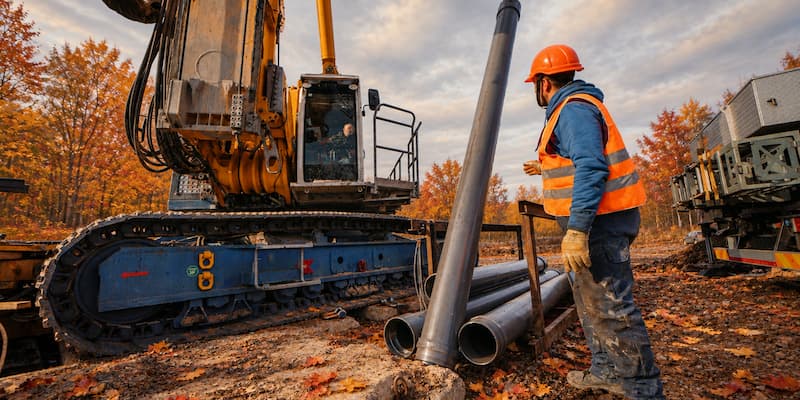
As autumn arrives, fallen leaves and wet weather can add to the amount of debris around a construction site. While leaves alone may not present a major fire risk, they can add combustible material to areas where other waste and materials have already built up.
Keep walkways, work areas and spaces around temporary buildings clear of leaves, packaging, timber offcuts and other combustible waste. Remove waste regularly and avoid allowing it to build up around heaters, electrical equipment, hot work areas or other potential sources of ignition.
Autumn is a useful time to look ahead rather than waiting for winter conditions to arrive.
Review the site’s fire risk assessment and check whether changes in the project, work activities, materials, temporary buildings or emergency arrangements need to be reflected. HSE states that fire precautions should take account of the changing nature of construction work and that risk assessments should be reviewed regularly and when site conditions change.
The aim is simple: make sure the fire safety arrangements on site reflect the work and conditions that are actually present.
Autumn is a good reminder to review fire safety before colder weather and shorter days become the norm. A few simple checks can help identify changes that need attention and make sure the site’s fire arrangements remain suitable as the project progresses.
Choose from:
Tough, reliable, and HSE-ready, Defender keeps your site safe, visible, and fully equipped.