On a busy construction site, every second matters.
A worker is using cutting equipment on the third floor of a temporary structure when sparks catch nearby materials alight. Within moments, smoke begins to spread. The fire alarm sounds. Workers start shouting instructions over the noise of machinery.
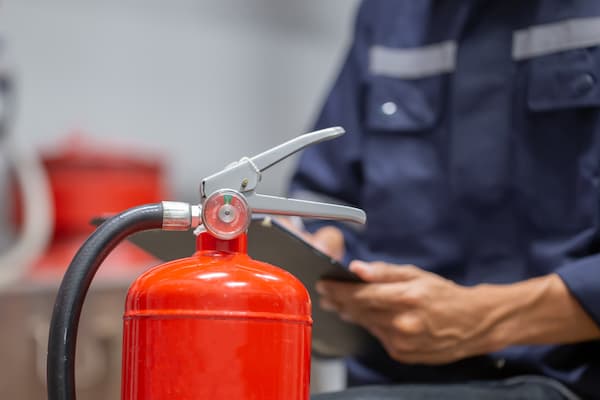
Someone needs a fire extinguisher. Fast.
But on a large site filled with scaffolding, stacked materials, temporary walkways and moving vehicles, emergency equipment can be difficult to spot.
This is where high-visibility safety flags can make a real difference.
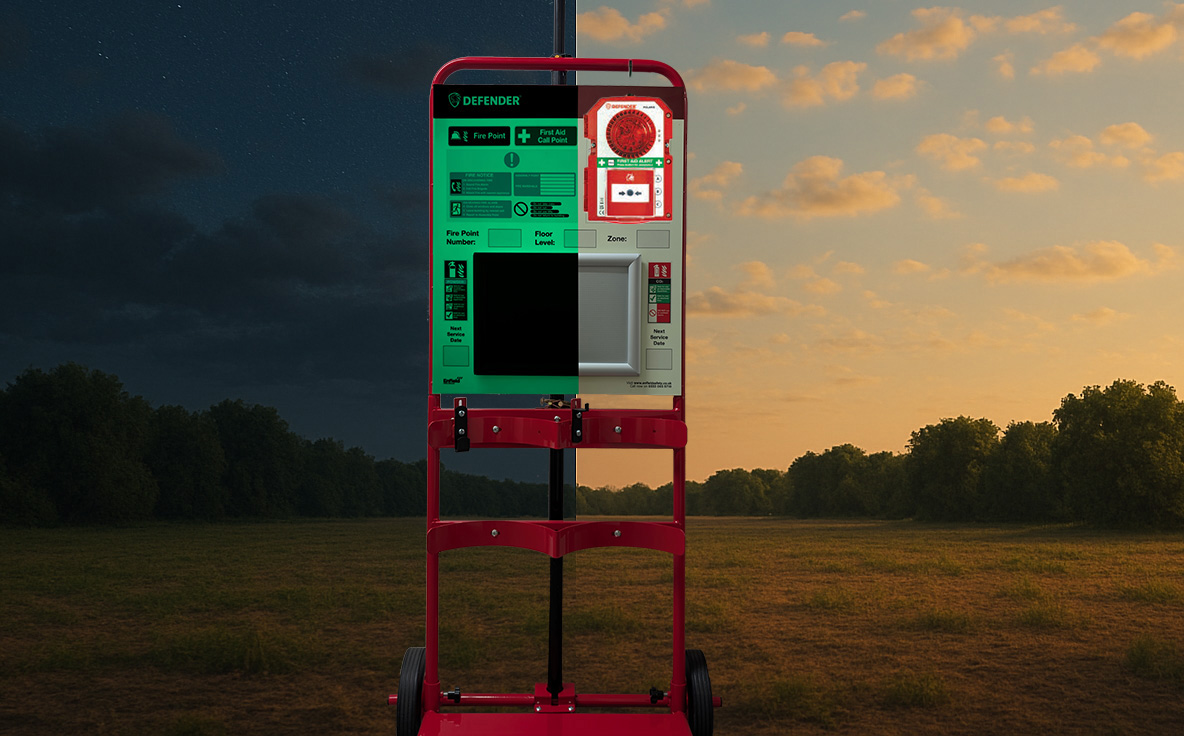
By clearly marking fire point trolleys, first aid stations and emergency response equipment, construction safety flags help workers find critical equipment quickly when time matters most.
The Problem with Visibility on Construction Sites
Construction sites are constantly changing.
One week, a fire point may sit beside a scaffold tower. The next week, it could be located behind materials, temporary fencing or machinery.
Even when emergency equipment is correctly installed, workers may struggle to see it because construction environments are:
- Crowded
- Dusty
- Visually cluttered
- Poorly lit in some areas
- Constantly evolving
Safety flags create movement and height, making emergency equipment easier to spot from a distance.
Colour-Coded Safety Flags for Faster Emergency Response
One of the biggest advantages of construction safety flags is instant visual recognition.
Different coloured flags help workers quickly identify the type of emergency equipment they need without wasting time searching.
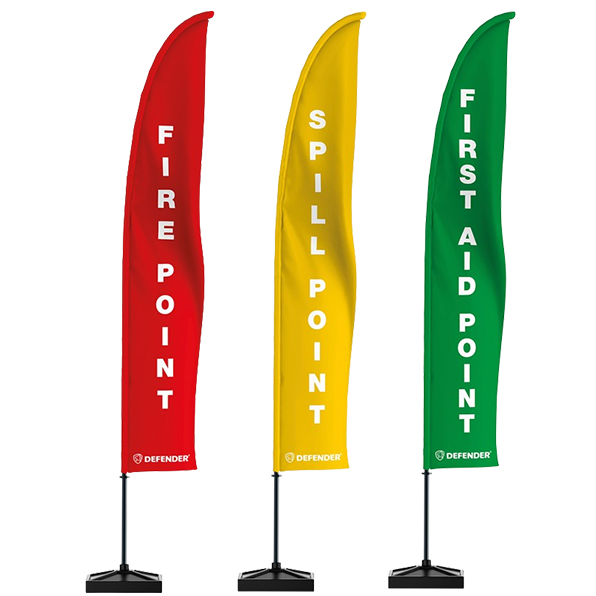
Safety flags are available in four highly visible colours:
- Red flags – Used to identify fire points and fire safety equipment
- Yellow flags – Used for spill points and spill response stations
- Green flags – Used to highlight first aid points and medical equipment
- Blue flags – Used for general safety points and site safety stations
This colour-coded system helps improve organisation across busy construction sites and makes emergency response faster and more efficient.
In high-pressure situations, workers can immediately recognise the correct emergency station from a distance.
Shop Safety Flags
Why Fire Point Visibility Is So Important
During a site emergency, confusion wastes valuable time.
Workers should never have to search for:
- Fire extinguishers
- Fire point trolleys
- First aid kits
- Spill kits
- Emergency assembly points
The faster equipment is located, the faster action can be taken.
Highly visible safety flags act as instant visual markers above busy work areas. They help workers identify emergency equipment quickly, even across large or obstructed construction sites.
Construction Sites Need Flexible Safety Systems
One of the biggest challenges in construction is that sites never stay the same for long.
Temporary routes move. Scaffold layouts change. Work zones expand.
Permanent safety systems do not always adapt well to changing environments.
Safety flags are useful because they are:
- Portable
- Easy to reposition
- Highly visible
- Quick to install
- Suitable for temporary works
This makes them ideal for:
- Building sites
- Civil engineering projects
- Infrastructure works
- Demolition projects
- Warehouse construction
- Large-scale refurbishments
Why Workers Notice Flags Faster Than Signs
People naturally notice movement before static objects.
That is why flags work so well on construction sites.
While traditional signs remain important for compliance, flags add an extra layer of visibility that helps attract attention quickly.
A Simple Upgrade With Big Safety Benefits
Many site safety improvements involve large investments or major operational changes.
Safety flags are different.
They provide a simple, affordable way to improve visibility across active construction environments without disrupting operations.
For site managers, that means:
- Better site organisation
- Improved emergency visibility
- Easier navigation
- Stronger visual communication
- Enhanced safety awareness
FAQs
What are construction safety flags used for?
Construction safety flags are used to improve the visibility of important safety equipment and hazard areas on building sites. They are commonly placed above fire points, first aid stations, spill kits and safety stations.
What do the different safety flag colours mean?
Construction safety flags are commonly colour-coded for different emergency points:
- Red – Fire points
- Yellow – Spill points
- Green – First aid points
- Blue – Safety points
This helps workers quickly identify the correct emergency equipment.
Why are safety flags important on construction sites?
Safety flags help workers quickly locate emergency equipment during urgent situations. Their height and movement make them easier to spot than standard low-level signage alone.
Can safety flags improve fire safety on site?
Yes. Red safety flags can help workers identify fire extinguishers and fire point trolleys faster, improving emergency response times during a fire incident.
Where should safety flags be installed?
Safety flags are commonly installed above:
- Fire point trolleys
- First aid stations
- Spill kits
- Safety stations
- Emergency assembly points
Are safety flags suitable for temporary construction sites?
Yes. Safety flags are ideal for temporary and changing construction environments because they are portable, easy to reposition and highly visible.
Do safety flags replace construction safety signs?
No. Safety flags work alongside traditional safety signage to improve visibility and hazard awareness on busy sites.
What industries use safety flags?
Safety flags are commonly used in:
- Construction
- Civil engineering
- Infrastructure projects
- Warehousing
- Manufacturing
- Demolition
- Utilities
For more advice on Defender safety flags, contact our sales team.