
Fire remains one of the most significant risks on construction sites across the UK. From welding and cutting operations to temporary electrical systems and fuel storage areas, construction environments often contain all the conditions needed for a fire to start and spread quickly.
Understanding the fire triangle is one of the simplest ways to identify fire hazards before they become incidents. Whether you’re a site manager, contractor, health and safety professional or business owner, knowing how fires start can help you protect workers, prevent costly delays and maintain compliance with UK fire safety requirements.
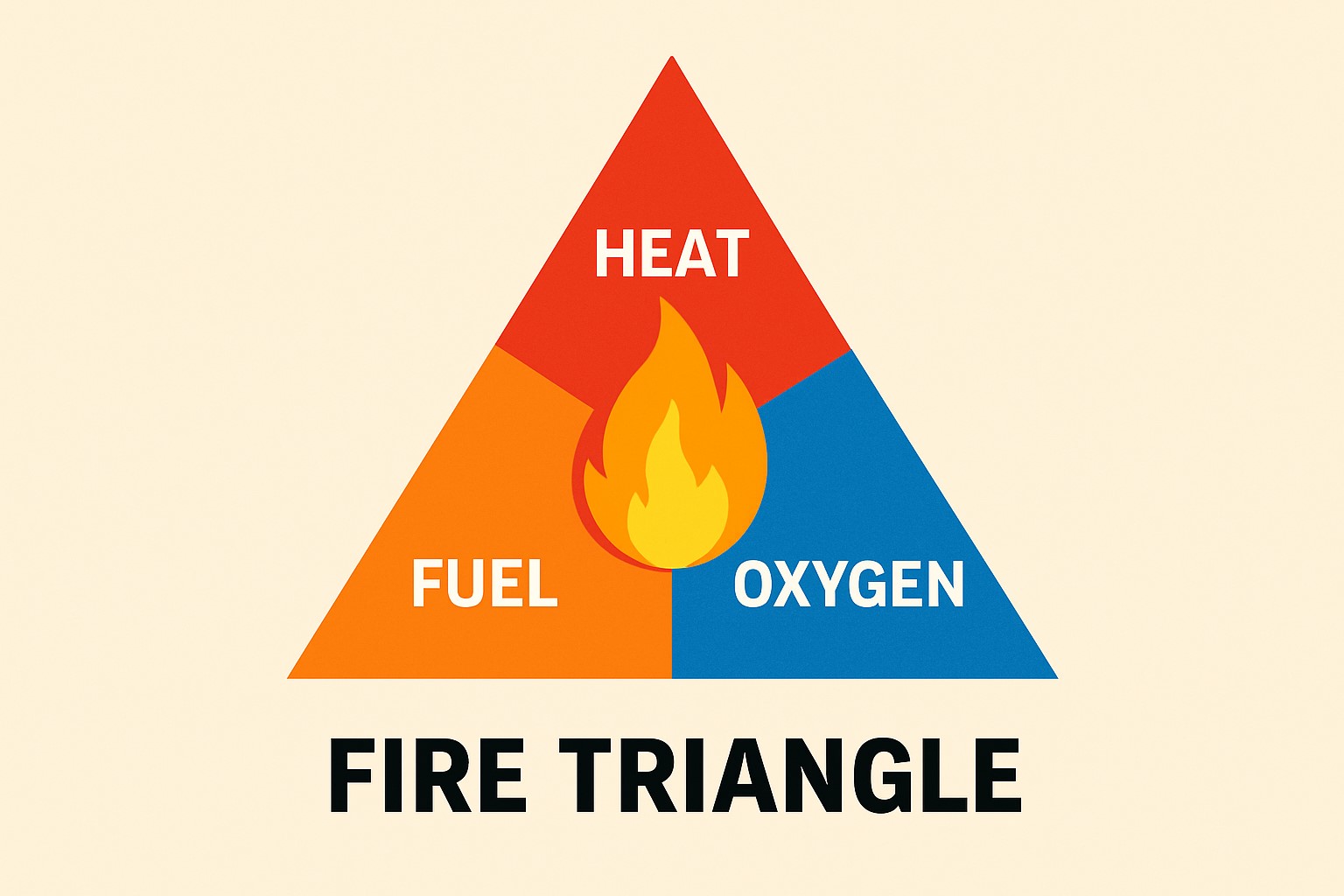
The fire triangle is a model used to explain the three elements required for a fire to ignite and continue burning:
When all three elements are present, combustion can occur. Remove any one of them and the fire cannot sustain itself.
Although the concept is simple, it remains one of the most important principles in fire safety and fire prevention.
Heat provides the energy needed to ignite a fuel source.
Common sources of heat on construction sites include:
Fuel is any combustible material capable of burning.
Examples commonly found on construction sites include:
Oxygen supports combustion and is naturally present in the atmosphere.
Because many construction sites are open environments with good airflow, oxygen is readily available to support a fire once it starts.
Understanding the fire triangle helps construction professionals identify risks before they develop into serious incidents.
When site teams understand how heat, fuel and oxygen interact, they can take practical steps to prevent fires from starting in the first place.
Effective fire prevention can help:
In our experience working with construction projects, fire risks rarely stem from a single issue. More often, they arise when multiple hazards are allowed to exist in the same area.
Our team regularly encounters sites where temporary electrical installations, fuel storage areas and hot works are operating simultaneously. These conditions can create all three elements of the fire triangle within a relatively small space, significantly increasing the risk of fire if suitable controls are not in place.
A common example is welding work taking place close to stored timber, packaging materials or fuel containers. Without adequate segregation and housekeeping measures, a single spark can quickly lead to a serious incident.
This is why regular inspections, fire risk assessments and clearly defined site procedures are essential throughout every stage of a construction project.
Fire Triangle Element | Common Construction Site Examples |
Heat | Welding, cutting, grinding, electrical faults, and temporary heaters |
Fuel | Timber, waste materials, packaging, fuels, paints and chemicals |
Oxygen | Natural airflow, ventilation systems and open working environments |
Identifying where these elements exist on site is often the first step in preventing fires.
Construction sites contain a range of activities and materials that can create fire risks if not properly managed.
Activities such as welding, flame cutting, grinding and soldering generate sparks and heat that can ignite nearby combustible materials.
One issue frequently identified during site inspections is combustible waste being stored too close to hot work activities. Sparks can travel several metres and ignite materials that may initially appear low risk, including cardboard packaging, timber offcuts and accumulated dust.
Implementing permit-to-work systems and fire watch procedures can significantly reduce these risks. Shop Hot Works Trolleys.
Temporary electrical installations can become fire hazards if poorly maintained. Common issues include damaged cables, overloaded circuits and faulty equipment.
We’ve seen occasions where extension leads have been daisy-chained together to power multiple tools, creating unnecessary heat build-up and increasing the risk of electrical failure. Routine inspections and maintenance remain critical.
Accumulated waste, packaging and combustible debris can provide a ready fuel source for fire. Good housekeeping practices, including regular waste removal and safe storage of materials, play a key role in reducing fire risk.
Many construction sites use petrol, diesel, paints, solvents and adhesives. These materials should be stored safely and kept away from ignition sources to minimise the risk of fire.
Learn more about fire prevention on site.
While the fire triangle remains widely recognised, modern fire science often refers to the Fire Tetrahedron.
The Fire Tetrahedron introduces a fourth element:
This helps explain how combustion continues once a fire has started, and it is commonly present in lithium battery fires.
Understanding this concept is useful when selecting fire suppression methods, as some extinguishing agents work by interrupting the chemical reaction rather than removing heat, fuel or oxygen.
Fire prevention and firefighting strategies are based on removing at least one of the three fire triangle elements.
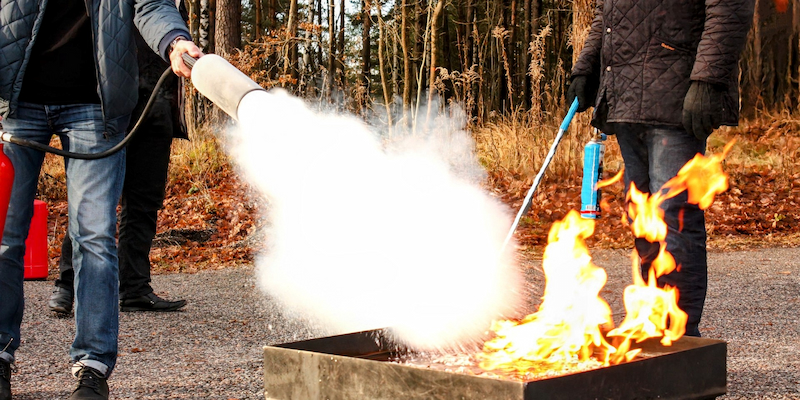
You can cool down the fire by applying water or using an appropriate extinguisher to suppress the flames.
You can stop specific fires involving liquid or gas by cutting off the supply. It’s best practice to ensure that flammable materials are stored properly and that waste is disposed of on a regular basis.
You can use a fire blanket, CO₂ extinguishers, or foam to smother the fire and reduce the oxygen supply.
Some extinguishing agents are specifically designed to stop the chemical process that sustains combustion.
The most effective fire prevention strategies focus on identifying hazards before work begins.
A fire risk assessment is one of the most important tools for managing construction site fire safety.
A suitable assessment should identify the following:
In practice, fire risks often change as a project progresses. Areas that were previously low risk may become high-risk work zones once new materials, equipment or activities are introduced.
For this reason, fire risk assessments should be reviewed regularly throughout the project lifecycle rather than treated as a one-off exercise.
Construction projects must comply with relevant fire safety legislation and guidance.
This may include:
This legislation places responsibility on designated persons to identify and manage fire risks. Learn more.
CDM Regulations require effective planning, coordination and management of health and safety risks, including fire safety. Learn more.
Suitable and sufficient fire risk assessments should form part of every site’s fire safety strategy.
Different types of fires require different extinguishers. On a construction site, the most effective extinguishers include:
Learn more about fire extinguishers and extinguisher certification.
At Defender, we provide a comprehensive range of fire safety solutions designed to protect construction sites from fire hazards. Our products include:
✅ Fire Extinguishers – A full range of extinguishers suited for all fire types.
✅ Fire Extinguisher Trolleys – Mobile solutions for quick access to fire equipment in high-risk areas.
✅ Maxi Safety Stations – All-in-one fire safety hubs with extinguishers, alarms, chemical spillage supplies, and first aid.
✅ Wireless Alarm Systems – The ideal fire safety solution for construction sites, crafted to enhance efficiency and ensure safety throughout your projects.
The fire triangle remains one of the most effective tools for understanding how fires start and spread. By recognising the relationship between heat, fuel and oxygen, construction professionals can identify hazards earlier and implement practical measures to reduce risk.
From hot works and temporary electrical installations to fuel storage and housekeeping standards, every aspect of a construction site can influence fire safety. Taking a proactive approach to fire prevention not only helps protect people and property but also supports project continuity, regulatory compliance and safer working environments.
Heat, fuel and oxygen.
It helps explain how fires start and provides a practical framework for fire prevention.
Common causes include hot works, electrical faults, poor housekeeping, flammable liquids and inadequate fire safety controls.
Through effective planning, fire risk assessments, good housekeeping, safe hot work procedures and suitable fire protection equipment.
The fire tetrahedron is a model that shows the four components needed for a fire to start and keep burning. It builds on the traditional “fire triangle” of heat, fuel, and oxygen by including a fourth element: the chemical chain reaction.